
Article: Your Scalp Is Skin Too
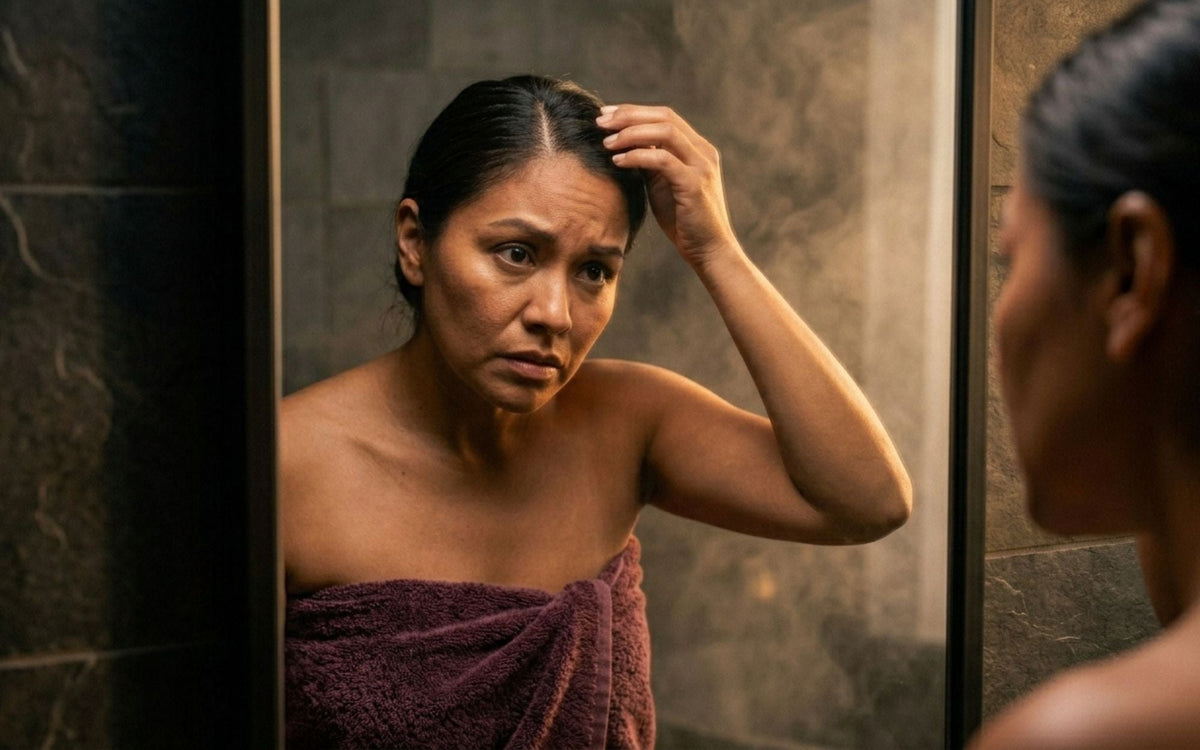
Your Scalp Is Skin Too
The skin beneath your hair deserves just as much attention as the skin on your face.
We spend so much time caring for our hair. We wash it, condition it, style it, and search for products that promise stronger, fuller, healthier-looking strands. But how often do we give the same attention to the skin beneath it?
Your scalp is skin, too. And sometimes, it's one of the first places to show that something in your body is changing.
From persistent itching and tenderness to unexpected shedding, your scalp may be asking for a little more attention than you've been giving it.
The Skin We Forget
Your scalp is living skin. It has a protective barrier, oil and sweat glands, and its own community of microorganisms that help maintain its environment. When things are out of balance, you may notice itching, flakes, irritation, or tenderness.
But your scalp lives under very different conditions than your face. For most of us, it's covered by hair, which can trap heat, moisture, oils, and product buildup. It's also exposed to friction, scratching, tight hairstyles, and sometimes far more heat than it needs.
And because we can't easily see it, we often don't notice something is wrong until it starts demanding our attention. We spend so much time caring for the hair we can see, conditioning it, styling it, protecting it from breakage, that we sometimes overlook the living skin beneath it.
Think of it like tending a garden. We admire what's growing above the ground, but what happens beneath the surface matters, too.
Of course, not every hair concern begins with the scalp. Genetics, hormones, medications, nutritional deficiencies, and medical conditions can all affect hair growth. But caring for your scalp is still an important part of caring for your hair. And it deserves more attention than we tend to give it.
Why Stress Can Show Up Months Later
Hair grows in cycles. Most of your hair is actively growing at any given time, while a smaller portion is resting before eventually shedding. A significant physical or emotional stressor can disrupt that cycle, causing more hairs than usual to enter the resting phase.
The increased shedding may not show up until two or three months later. By then, you may have made it through the hardest part of whatever happened. Life may even be starting to feel a little more manageable. Then suddenly, you're pulling handfuls of hair from your brush or noticing more strands circling the shower drain. It's frightening, especially when you can't connect it to anything happening right now.
This type of temporary shedding is called telogen effluvium. It can happen after significant illness, surgery, childbirth, major emotional stress, and other changes that place strain on the body.
Not all hair loss is telogen effluvium, and not everyone who experiences stress will develop it. But understanding that delayed shedding is possible can help you recognize why your hair may be changing. Stress can also aggravate certain itchy or inflammatory skin conditions, including those affecting the scalp. And sometimes the itching becomes its own problem.
You itch, so you scratch. Scratching irritates the skin, which can make it itch even more. Before long, you're caught in a cycle that feels impossible to interrupt. That's why persistent itching deserves attention rather than simply trying harder not to scratch.
When Your Scalp Is Telling You Something Deeper
Sometimes changes in your scalp or hair point to something beyond everyday stress. Autoimmune conditions such as alopecia areata and lupus can affect hair growth. Psoriasis can cause inflammation and scaling on the scalp. Thyroid conditions, including Hashimoto's, can be associated with thinning hair, dryness, and changes in hair texture.
There are also infections, allergies, and other scalp conditions that can cause itching, irritation, and hair loss. If you notice sudden bald patches, persistent shedding, scaling, burning, pain, or changes that don't improve, please see a dermatologist or your healthcare provider. Different conditions can look remarkably similar, and some forms of hair loss can become permanent without appropriate treatment.
It's Never Just Hair
There's another side to this that doesn't get talked about enough. Hair is deeply personal. It's part of our culture, our identity, our history, and the way we choose to show up in the world.
For some of us, it's also connected to generations of memories. Sitting between someone's knees while they parted and braided our hair. Learning how to care for our curls, coils, or straight strands. The familiar rituals that became part of who we are.
When your hair begins to thin or fall out, it can feel like losing a piece of yourself. And when you're already navigating illness, grief, or another difficult season, that loss can feel especially cruel. You may wonder whether your hair will come back, whether anyone else notices, or why your body seems to be changing in ways you can't control.
Care for Your Scalp the Way You Care for Your Face
Once you begin thinking of your scalp as skin, some of the things we do to it deserve a second look. We wouldn't intentionally leave heavy buildup on our faces for days, repeatedly scratch irritated patches, or assume that burning and tenderness are normal parts of a skincare routine.
Yet we sometimes accept those things when it comes to our scalps. Caring for your scalp doesn't have to be complicated. A few thoughtful habits can make a difference.
Cleanse regularly, but gently. Your scalp produces oil, sheds skin cells, and collects sweat and product residue. How often you wash depends on your hair type, styling practices, and scalp needs. The goal is to keep it clean and comfortable without unnecessary irritation.
Turn down the heat. Very hot water and excessive heat styling can contribute to dryness and damage. Your scalp doesn't need a scalding shower to feel clean.
Rethink what makes a hairstyle protective. Braids, twists, locs, extensions, and other styles can be wonderful ways to manage and protect hair. But a style that constantly pulls at your hairline or leaves your scalp sore isn't protecting your follicles.
Repeated tension can cause traction alopecia, a form of hair loss that may become permanent. If a hairstyle hurts, feels excessively tight, or causes bumps and tenderness, pay attention. A true protective style doesn’t leave you with a receding hairline and headaches.
Touch your scalp with intention. If your scalp is comfortable and free of painful or inflamed areas, take a quiet minute to massage it gently with the pads of your fingers. Better yet, ask your partner to give you a scalp massage. Not a scratching session. A gentle massage.
It's a small act of devotion, an opportunity to slow down and enjoy being cared for. And because someone else can see areas of your scalp you can't, they may notice a change you've overlooked. A tender spot. An unusual patch. An area where the hair seems thinner than it used to be.
Sometimes caring for ourselves begins with simply paying attention.

Leave a comment
This site is protected by hCaptcha and the hCaptcha Privacy Policy and Terms of Service apply.