
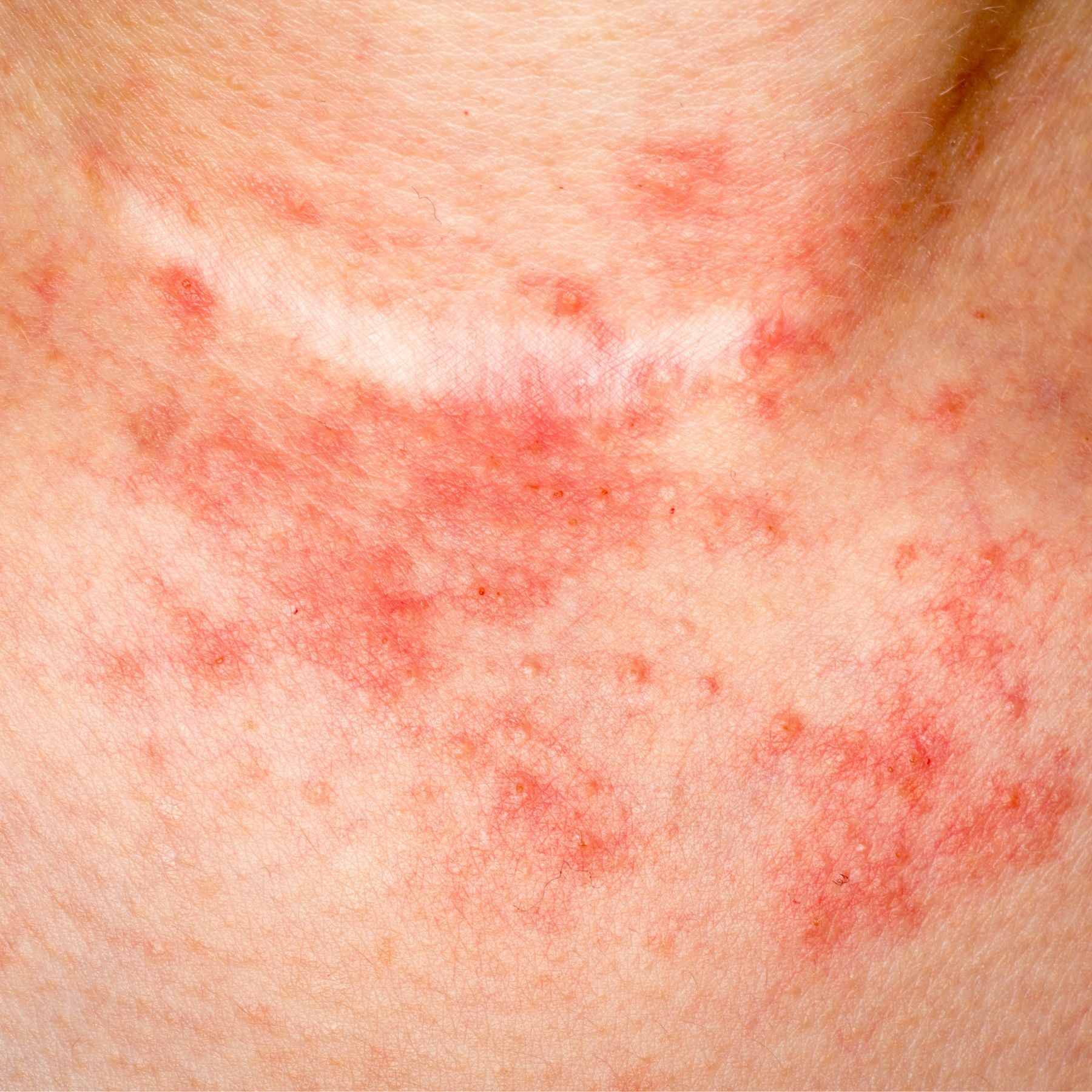
What Is Reactive Skin — and Why Does It React to Everything?
You already know the feeling.
You try a new moisturizer, one with good reviews, clean ingredients, nothing suspicious on the label, and within minutes your skin is burning. Or you wake up one morning and your face is red for no reason. Or something that worked fine last month suddenly doesn't anymore.
You're not imagining it. Your skin isn't being dramatic. It's reactive and there's a reason it's behaving this way. Always start with your dermatologist or general practitioner.
First: Reactive Skin Is Not the Same as Sensitive Skin
These two terms get used interchangeably, but they're actually different things and the difference matters for how you care for your skin.
Sensitive skin is largely genetic. You were born with a thinner, more delicate skin barrier that has always needed extra gentleness. It tends to be dry, fair, and easily affected by weather or environmental changes. It's a skin type, not a condition.
Reactive skin is different. It's a response, usually triggered by something happening internally. Your immune system, your hormones, your stress levels, your medications, a flare of an underlying condition. Reactive skin may have once been perfectly normal skin that changed. That shift is the signal something internal is driving the external reaction.
This distinction matters because caring for reactive skin isn't just about finding gentler products. It's about understanding that your skin is communicating something your body is experiencing and responding accordingly.
What Reactive Skin May Feel Like
Reactive skin doesn't look the same on everyone, but the experience tends to feel familiar:
- Burning or stinging after applying products — even ones labeled for sensitive skin
- Redness that appears without obvious cause
- Skin that feels tight, hot, or uncomfortable for no clear reason
- Products that worked before suddenly causing reactions
- Flare-ups that seem tied to stress, illness, hormonal shifts, or seasonal changes
- A constant low-level irritation that never fully resolves
- Feeling like you can't trust anything you put on your face
If any of that sounds like your life, you're in the right place.
Why Skin May Become Reactive
Reactive skin is driven by internal factors, which is exactly why it's so confusing and frustrating to manage. You can change every product in your routine and still have flares, because the trigger isn't in the bottle. It's in your body.
Common internal drivers of reactive skin include:
Autoimmune conditions. When the immune system is dysregulated, it can create systemic inflammation that shows up directly on the skin. Conditions like Hashimoto's thyroiditis, lupus, Sjögren's syndrome, rheumatoid arthritis, and eczema all have well-documented skin and scalp manifestations. Your skin is not separate from your immune system — it is part of it.
Hormonal shifts. Estrogen, progesterone, cortisol, and thyroid hormones all influence how the skin behaves. Perimenopause, postpartum recovery, thyroid dysfunction, and even monthly hormonal cycling can dramatically change skin reactivity seemingly overnight.
Chronic stress. Stress triggers cortisol, which disrupts the skin barrier and increases inflammatory response. People often notice their skin becomes more reactive during prolonged periods of emotional or physical stress, grief, illness, burnout, major life changes.
Medications. Some medications, particularly those used to treat autoimmune conditions, blood pressure, or mood, have skin reactivity as a known side effect. If your skin changed around the time you started a new medication, that connection is worth noting.
A compromised skin barrier. Sometimes the barrier itself has been damaged by over-exfoliation, harsh cleansers, or prolonged exposure to irritants and the skin becomes reactive as a result. This is sometimes called sensitized skin, and it can improve with the right care.
How Autoimmune Conditions Show Up on the Skin
If you're living with an autoimmune condition, you know that the skin is often where the story gets told first. Here's how some of the most common conditions manifest on skin, scalp, and hair — not as medical advice, but as recognition, because feeling seen is where healing starts.
Lupus — Beyond the well-known butterfly flush across the cheeks and nose, lupus can bring extreme photosensitivity, scalp lesions, and significant hair thinning that requires the most careful, gentle touch.
Hashimoto's Thyroiditis — The fatigue is often discussed, but the skin changes are profound: persistent sandpaper-like dryness, thinning of the outer third of the eyebrows, brittle hair that seems slow to grow and fast to shed.
Alopecia Areata — The sudden appearance of smooth, circular patches of hair loss. It's an unpredictable, emotionally significant condition that affects identity as much as it affects the scalp.
Psoriasis — Far more than dry skin, psoriasis involves an accelerated cell turnover cycle that creates silvery scales and plaques that can itch, burn, crack, and bleed. It requires a barrier-supportive approach, not aggressive exfoliation.
Rheumatoid Arthritis — While RA primarily targets the joints, it can manifest on the skin as small red spots from vasculitis, thinning or fragile skin, or nodules just under the surface.
Sjögren's Syndrome — Often called the "dryness disease," Sjögren's depletes moisture from the eyes and mouth, but also leaves skin feeling perpetually tight, parched, and easily irritated. Barrier support is essential.
Celiac Disease — Many people don't realize that celiac can cause Dermatitis Herpetiformis — an intensely itchy, blistering rash that flares in response to gluten. For some, this is the first sign of the condition.
Eczema — An overactive immune response that breaks down the skin barrier, leading to cycles of intense itching, inflammation, and flare fatigue. The barrier disruption makes skin hypersensitive to almost everything.
Show Reactive Some Love (and What Could Makes It Worse)
What helps:
The goal with reactive skin is always to calm, not to correct. Reactive skin does not need acids, exfoliants, or stimulating ingredients. It needs ingredients that support the barrier, reduce irritation, and restore comfort without adding burden.
Look for: synthetic fragrance-free or low-fragrance formulas, minimal ingredient lists, barrier-supporting ingredients like ceramides and plant oils rich in fatty acids, and proven soothing botanicals like calendula, CICA, aloe, and marshmallow. Gentle is not a compromise — it's the strategy.
What makes it worse:
- Fragrance (synthetic or natural) in high concentrations — one of the most common triggers
- Alcohol-based toners or astringents
- Heavy physical scrubs or frequent chemical exfoliation
- Sulfate cleansers that strip the barrier
- Layering too many products at once
- Switching products too frequently when frustrated
The instinct when your skin is flaring is often to do more — try something new, add a treatment, troubleshoot aggressively. With reactive skin, the opposite is usually true. Less is more. Consistency is more useful than novelty.
How to Build a Routine for Reactive Skin
Keep it simple. The goal is to restore barrier function and reduce reactivity over time, not to treat, correct, or transform while your skin is struggling.
Step 1 — Cleanse gently. Use a cleanser that doesn't strip. A low-lather formula that removes what needs to go without disturbing what needs to stay. Look for aloe, glycerin, and gentle plant-derived surfactants, and nothing that leaves your skin feeling tight after rinsing. → Grace Gentle Daily Cleanser is EO-free, sulfate-free, and built around aloe, glycerin, and marshmallow root — ingredients that cleanse and pamper.
Step 2 — Mist while skin is still damp. A hydrating mist applied to damp skin delivers nourishing botanicals and soothing relief. Look for formulas built around aloe, hyaluronic acid, snow mushroom and skin-calming botanicals, without fragrance or alcohol. → Mercy Essence Soothing & Hydrating Mist is EO-free and built around aloe, witch hazel distillate (the gentle, non-astringent form), niacinamide, hyaluronic acid, and calendula — immediate comfort for skin that's irritated, tight, or mid-flare.
Step 3 — Support the barrier. Follow the mist with something that seals, protects, and restores without adding irritation. A well-formulated face oil can do remarkable things for barrier restoration and skin resilience. Look for ceramides, plant oils rich in linoleic acid, and skin-identical lipids. → Forgiving Face & Neck Radiance Oil is built around ceramide NP, CICA, milk thistle, pomegranate, and elderberry, with less than 1% essential oils. Sweet Orange is considered gentle and uplifting. Frankincense is known for its soothing, anti-inflammatory properties, and is one of the gentlest essential oils.
One thing at a time. If you're introducing anything new, do it one product at a time with at least a week between additions. Patch test on your inner arm or jawline first. Give your skin time to speak before you add the next thing. This is not impatience, it's information.
A Note on What We Are — and Aren't
826 & Co. is not a medical brand. We don't treat conditions, and nothing in our line is a substitute for the care of a dermatologist or rheumatologist who knows your full picture.
What we are is a brand built by someone living this, not inspired by it from the outside, but created from lived experience with Hashimoto's, rosacea, and a body that doesn't always cooperate. We know what it means to study ingredient labels with intention. To spend real money on products that make it worse. To feel like nothing was made for you.
We believe skincare for the autoimmune and reactive skin community should be a source of relief, not another thing to worry about.
826 & Co. products are plant-powered, American-made, and formulated for skin that needs gentleness, not guesswork. A portion of every purchase supports suicide prevention — because no one should carry heavy seasons alone.

Leave a comment
This site is protected by hCaptcha and the hCaptcha Privacy Policy and Terms of Service apply.